

12 May, 2026
Small Bathroom Ideas: 15+ Ways to Maximise Your Space
Explore 15+ small bathroom ideas for Australian homes. Get practical layout, storage and tapware tips to maximise every square metre.

Video Credit: Fifi McGee | Interior Design & Renovations
Start With the Right Small Bathroom Layout
Layout is key. Prioritise settling on the small bathroom layout before you pick your tile, tapware finish, or vanity profile; no amount of gorgeous material choices will redeem a small bathroom if the floor plan itself is flawed.
The three configurations that consistently work best for small bathrooms in Australian homes are: the wet-room, the linear or galley configuration, and the corner shower layout. These layouts differ in terms of footprint and also fixture relationships. It's possible to accommodate a shower-only ensuite in 900 mm × 1800 mm, but when you apply the 550 mm minimum circulation clearance in front of each fixture required, it becomes apparent how quickly this layout consumes floor area. Also, the NCC 2022 Livable Housing provisions require an 820 mm clear door opening (NCC 2022, ABCB Housing Provisions, Part 12.2) and a 900 mm × 1200 mm clear zone in front of the toilet — dimensions that will have a significant impact on what your small bathroom layout options are from day one.
The direction that bathroom doors swing is the decision often given little consideration. Doors opening into a small bathroom, say 1500 mm × 1800 mm, will impact the required circulation clearance in front of either the vanity or toilet. If you can swing it, have the bathroom door open out; alternatively, use a sliding door or cavity door to reclaim the floor area that opening doors take up. Consider the location of your fixtures: last, place the toilet on a wall away from traffic, then work on the shower and vanity from your line of vision in the doorway.
Once you get the bathroom layout right, then you'll need to select the small bathroom fittings and fixtures: those that are the appropriate size and are designed for small spaces, as they can reclaim floor area that you won't have from a good layout alone.

Space-Saving Fixtures and Fittings That Actually Work
Small bathrooms benefit from the wall-hung toilet pans that are now available. Concealing the cistern inside the wall cavity means approximately 150–200 mm more floor area than a back-to-wall suite to use elsewhere. Wall-hung pans from Fienza and Poseidon start from around $303 to $934 AUD. Compatible in-wall cisterns add $165 to $1,283 depending on specification. All cistern and pan connections must be handled by your licensed plumber — the in-wall installation involves concealed plumbing governed by NCC 2022, ABCB Housing Provisions, Part 10.2.
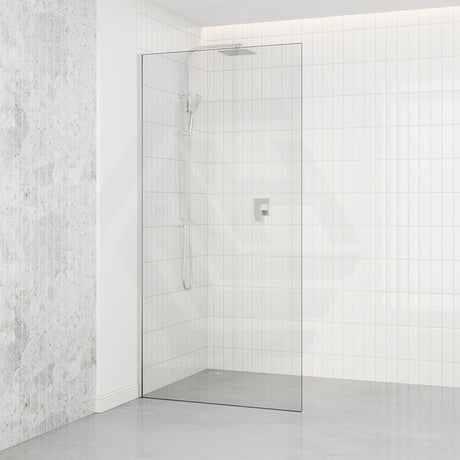
Choose a shower screen that is a frameless, walk-in type — no door and no pivot hardware. Two benefits here: they are easy to clean and you don't have the frame dividing the visual field. Covey makes a strong range of frameless walk-in screens from around $130, with 10 mm tempered glass certified to AS/NZS 2208. Use a recessed shower niche instead of a corner caddy in the shower, which eliminates the visual clutter that makes small bathrooms seem even smaller than they are.
A small 1200 mm bath is possible in a select number of floor plans. But be direct about it: a bath requires at least 1800 mm of clear floor space around it. In most small bathrooms, that simply isn't possible, so prioritise the shower space and put any remaining budget into quality tapware and fittings.

Tiles, Colour, and Light: Practical Tricks to Make a Small Bathroom Feel Bigger
Using large-format tiles in small bathrooms is not just a design choice — it is a practical specification decision. Using 600 × 1200 mm porcelain tiles means far fewer grout lines than using 300 × 300 mm tiles for wall and floor surfaces; fewer grout lines mean larger perceived space. Rectified tiles are precisely cut by machine, allowing a 2 mm joint compared to the minimum 5 mm required for pressed tiles. Tiles in the wet area must be matt or textured; polished porcelain is considered too smooth and will not satisfy the slip resistance rating required under AS 4586.
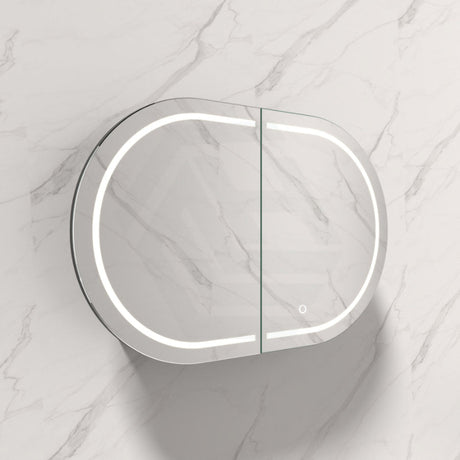
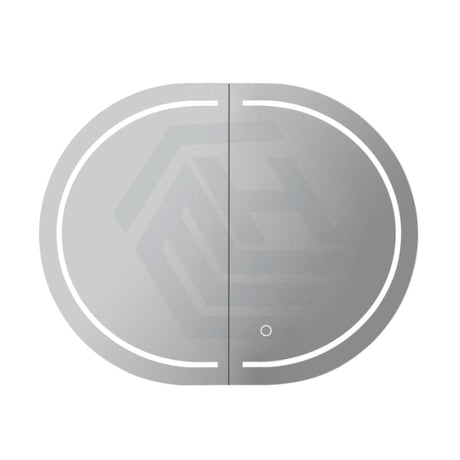
An LED mirror over the basin serves as vanity lighting. LED mirror cabinets ($390 to $1,096) combine mirror, storage, light, and demisting into a single wall-hung product, freeing up floor space. All electrical work must be undertaken by a licensed electrician in compliance with AS/NZS 3000.

Small Bathroom Vanity
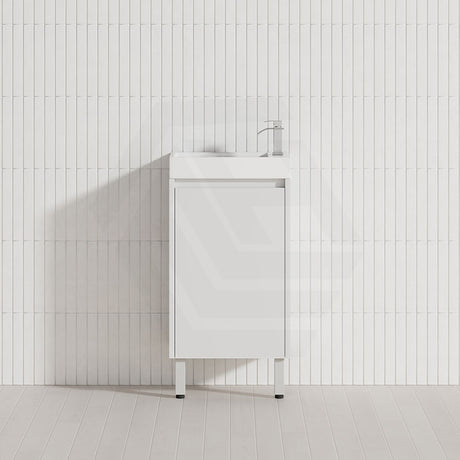
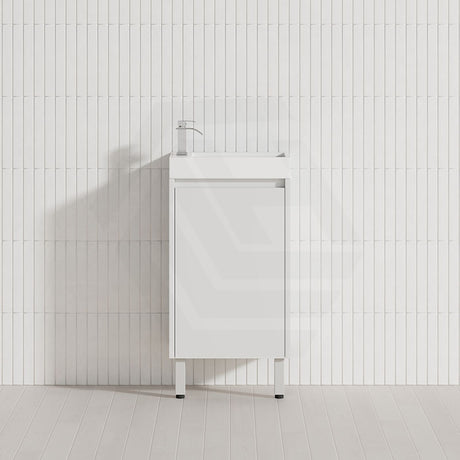
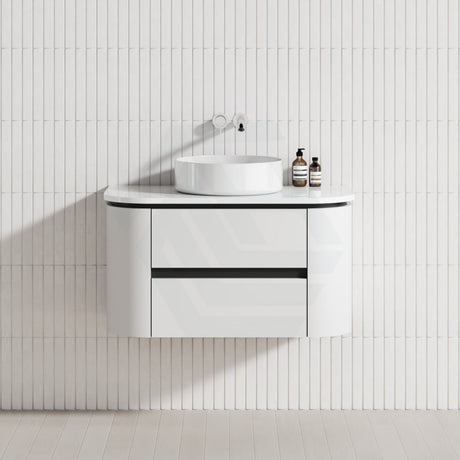
Most people don't realise there is more than one depth of bathroom vanity unit. Where a standard vanity sits at 450 mm deep, selecting a 360 mm small bathroom vanity or 300 mm compact vanity significantly increases available floor space in a cramped bathroom or ensuite. A wall-hung small bath vanity makes the room feel larger by exposing the floor beneath and is easier to clean around. If you want a wall-hung unit, confirm there are sufficient timber noggings or studs in the wall to fix the cabinet to — ask your builder to install noggings before you purchase if needed.
Cabinet material and basin integration are separate decisions. Waterproof PVC vanities start from around $300. Water-resistant MDF cabinets range from $600 to $1,200, while premium structural-grade timber such as the Australian-made ranges used by Aulic sit above $1,200. Basin integration is a separate small bathroom vanity choice: semi-recessed basins project 50% in front of the cabinet, allowing a shallow compact vanity to house a wider basin where 450 mm depth is not possible; undermount basins provide the cleanest bench top finish but require a thicker benchtop to support the basin rim. Vanity cabinets almost never include the basin mixer and waste, so allow for these in your budget. All tapware sold in Australia must be WaterMark certified — ask for certification before purchasing.

Small Ensuite Ideas and Small Bathroom Renovation Ideas on a Budget
Small ensuite ideas always begin with budget. A complete small bathroom renovation in Australia — including waterproofing, tiling, vanity, toilet suite, shower screen, and labour — sits between $10,000 to $25,000 (HIA Bathroom Renovation Cost Guide 2025), with Sydney and Melbourne at the higher end. A cosmetic rework over an existing sound waterproofing membrane is more likely to fall in the $8,000 to $12,000 range.
The most common cause of small bathroom renovation ideas going awry is trade sequencing. The correct order is: demolition, rough plumbing, waterproofing membrane, tiling, fixtures, then electricals. Waterproofing must be installed by a licensed waterproofer — this is a separate and distinct trade licence from other trades in most states — and skipping or missequencing this step is the most costly mistake a homeowner can make.
Add an additional 10% to 15% to your tile purchase to allow for cutting waste, and always budget for additional substrate to ensure a flat, even surface. Include a 10% allowance for cost overrun.
Good ventilation is one of the most overlooked elements of a small ensuite design, and it's also one of the areas where the building code sets a firm floor. NCC 2022 mandates that any wet area without an openable window must have a minimum 25 L/s (NCC 2022, ABCB Housing Provisions, Part 10.8) exhaust fan rate. An appropriately sized exhaust fan will help preserve the life and finish of everything in your small ensuite. Some work is legal to do yourself — mounting accessories, hanging a mirror, and installing a flat-pack vanity cabinet. Every plumbing connection must be completed by a licensed plumber, and a licensed electrician must handle all LED mirror installation and heated towel rails. Get the trades in the right order and your small bathroom ideas will be legally compliant and as cost-effective as possible.
References
National Construction Code 2022, ABCB Housing Provisions, Part 12.2 Livable Housing
National Construction Code 2022, ABCB Housing Provisions, Part 10.2 Wet Areas
AS/NZS 3000:2018 Electrical Installations (Wiring Rules), Standards Australia
HIA (Housing Industry Association) — Bathroom Renovation Cost Guide 2025
National Construction Code 2022, ABCB Housing Provisions, Part 10.8 Condensation Management