29 September, 2026
Old Style Toilets Australia: Heritage Looks, Modern Plumbing
Discover old style toilets Australia homeowners choose for heritage renovations. Compare cistern styles and modern plumbing standards.

When spec'ing out a heritage bathroom renovation in Australia, nothing sets the period tone like a vintage-looking loo.
From classic white ceramic pans to exposed flush pipes and high-level cisterns, old style toilets Australia homeowners can choose from today offer the look of yesteryear but conform to modern plumbing systems and water regulations. Here's a guide to choosing the right heritage-style suite for your renovation.
A heritage bathroom renovation demands period-authentic finishes at every turn — and the toilet suite is rarely an afterthought. From classic white ceramic pans to exposed flush pipes and high-level cisterns, old-style toilet suites available in Australia today offer the look of yesteryear but conform to modern plumbing systems and water regulations. Styles range from dramatic high-level cistern configurations mounted 1,200–1,500 mm above the pan, to close-coupled suites and back-to-wall designs — each carrying mandatory WaterMark certification and meeting current Australian water-efficiency standards.
Video Credit: Built By Becker
Old Style Toilet Suites in Australia
Old-style toilets in Australia typically reference the Victorian and Edwardian periods. Their defining features include:
• High-level wall-mounted cisterns: a big white tank high on the wall that flushes the pan through a long exposed pipe and lever or pull chain.
• Exposed cistern-to-pan flush pipes.
• Traditional pedestal pans with a wider footprint than modern low-profile pans.
• Polished chrome or brushed nickel fittings, including chain pulls and brackets.
The pan and cistern design are important visual elements, so pay attention to the hardware and fitting finish (though it's worth considering if you plan to specify matching heritage taps for the basin and a matching bath filler).
While some do sell original antique toilets, most modern Australian homeowners and designers specify heritage style toilets made with modern vitreous china and conforming to Australian plumbing regulations.
Genuine period fixtures can present compliance issues and installation challenges.

Common Styles of Old Style Toilets Available in Australia
### High-Level Cistern Toilets
High-level toilets are an unmissable reference to the past. They include a traditional toilet pan shape, a long exposed flush pipe, and a cistern mounted high on the wall, between 1,200–1,500 mm above the pan.
Most high-level cistern toilets are activated by a pull chain. The chain pull and flush pipe are usually bright polished chrome, though some suppliers offer alternatives such as a matte black finish.
High-level toilets require good support on the wall (which can mean fixing to brick or stud walls or adding backing support) and sufficient height to enjoy the flush chain.
### Close-Coupled Suites
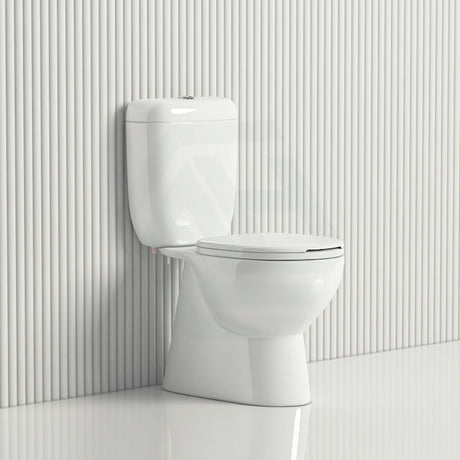
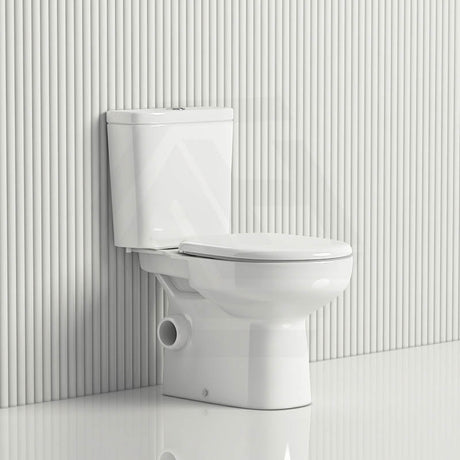
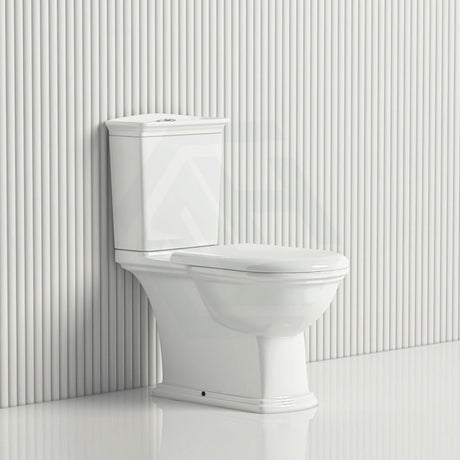
In a close coupled toilet suite, the cistern sits directly on the pan. They look just like the standard WC you see in most Australian homes.
In a heritage style renovation, a classic white close coupled toilet suite is an authentic reference to homes from the latter part of the Victorian era through the mid-century. It also provides a more modern aesthetic and works with most home layouts, as it doesn't require wall anchors for a high-level cistern.
### P-Trap and S-Trap Types
Heritage style toilets in Australia can be either P-trap (wall outlet) or S-trap (floor outlet) designs. Both are common, but it's worth double-checking with your plumber on the best option for your home.
Pan set-out dimensions typically range from 140 mm to 180 mm for S-trap configurations, with P-trap outlets set at a standard 185 mm height from finished floor level.
P-trap toilets (wall outlet) generally have an outlet at 185 mm from the finished floor.
If you're building your bathroom or renovating and can lift the floor tiles, it's easy to adjust the outlet height. However, if you're changing the outlet height to match the new toilet, this can be expensive.
### Back-to-Wall Toilet Suites
Back-to-wall toilets have a classic toilet pan connected to a concealed frame and cistern behind the wall. Back-to-wall heritage pans are often seen in heritage-style renovations where the walls are being opened up. It's a great option if you want the classic pan shape but don't want a visible cistern.

Modern Plumbing Standards Behind the Heritage Look
Toilets sold in Australia must carry WaterMark certification (WaterMark Certification Scheme) — this is a mandatory national product certification. Your licensed plumber (state and territory plumbing licensing legislation) won't be able to install a non-compliant suite and local authorities won't issue a compliance certificate.
All Australian states and territories require a licensed plumber to install a toilet. So even if it seems like a straightforward home improvement project, you'll need a licensed plumber to complete the connection work.
The Australian Standard regulating water efficiency and performance, AS/NZS 6400:2016, states that toilets can only be connected to the home's water supply if the suite has an average flush volume (AS/NZS 6400:2016) of 5.5 litres or less. The average flush volume is calculated as one full flush plus four reduced volume flushes divided by five.
For example, a dual-flush unit with a full flush of 4.5 litres and a reduced flush of 3 litres delivers an average of 3.3 litres per flush — a WELS 4-star rating.
You can find more information about these requirements in the WaterMark Certification Scheme and the national plumbing standard AS/NZS 3500.2:2025, which sets out the requirements for sanitary plumbing (AS/NZS 3500.2:2025) and drainage requirements, including pan connections and drain grading to the building connection.
Fortunately, heritage-style toilets made in or imported to Australia must be compliant, too. You'll find plenty of options from sanitary ware brands such as Fienza and Poseidon.

Choosing the Right Old Style Toilet for Your Bathroom
The following is a short guide to the important factors to consider before choosing a heritage style toilet.
- Heritage toilets are usually close-coupled, or traditional tank toilets, with a standard height cistern, but they can also have high-level tanks. The cost difference between the two options isn't usually much and it's often a matter of personal preference, but the more traditional high-level tank will cost more due to flush pipes, mounting brackets and more labour to install the pan and cistern on level. - Decide on the colours of your walls, bench, basin, tapware and flooring before choosing. - Make sure any new toilet is compliant with the WaterMark Certification Scheme. You are allowed to have a heritage style pan or cistern, but they still have to be WaterMark compliant. According to AS/NZS 6400:2016, the WELS rating applies to the whole toilet suite registration, not individual components. - If you want a traditional flush pipe and valve, they need to be WaterMark compliant with the current standard. - All flexible hose connections need to meet current WaterMark standards. - Check that the trap is correct. Your licensed plumber will need to confirm whether you have an S-trap, which connects to the floor, or a P-trap, which connects to the wall, to make sure the correct pan is ordered. If your drain depths aren't correct it may involve replumbing or even redoing a section of the floor. - Set-out size is the dimension measured from your finished wall to the centre of the floor waste outlet (this is the size of the S-trap). Heritage toilets usually have a standard set-out of 180 mm for an S-trap, but they also come in 160 mm or 140 mm. You can also choose an adjustable pan to suit, usually ranging from 100–180 mm. If opting for a P-trap, this is measured from your finished floor up to the centre of the wall outlet, and is usually 185 mm. - Choose whether you want a full suite or just the pan. Buying the pan only will save money, but the cistern will need to be similar in age to look authentic. - Make sure the colour and style of any buttons, levers or handles suit the period style and coordinate well with the tapware, bench and any accessories. Brushed nickel is a good option for a period styled bathroom, because it blends well with water marks and fingerprints in a busy family bathroom. Polished chrome suits a more formal Edwardian-style bathroom. Choose whether you want a lever or a button first, as this is a requirement of the tank. The colour and finish on the cistern, the pan, the basin taps, the towel rail and other accessories should all match for a consistent and harmonised result. - Heritage toilets usually have D-shaped seats. Check that a replacement toilet seat is available for your model and make a note of the size needed. Modern oval shaped toilet seats may not be suitable. - Make sure you have the correct toilet seat. This is the only part of the toilet that you can replace yourself without a trade licence, as long as the connections aren't altered. - Price. Close coupled toilet suite options range from $248 to $1,060 for the fixture only. Allow $600 and $1,500 per toilet, installed, for a straight replacement toilet suite, depending on your location and configuration. - Check that they can be easily and effectively cleaned. - Check that they can be easily and effectively cleaned.

Installation, Costs, and Practical Considerations
You'll need to engage a licensed plumber to install any old style toilets Australia homeowners select, in any state or territory. This includes the supply, waste connections and connecting the cistern. A like-for-like traditional toilet swap typically takes a licensed plumber one to two hours, while a high-level cistern installation generally requires three to four hours due to the additional mounting and pipework involved. Ask your plumber to provide a compliance certificate when the connection work is complete. Fienza and Poseidon both make heritage toilets which meet all current standards in Australia.
References
WaterMark Certification Scheme, Australian Building Codes Board
AS/NZS 6400:2016 Water efficient products — Rating and labelling (incorporating Amendment No. 1:2022 and Amendment No. 2:2022), Standards Australia
AS/NZS 3500.2:2025 Plumbing and Drainage — Sanitary Plumbing and Drainage, Standards Australia
State and territory plumbing licensing authorities (Building and Plumbing Commission Victoria; Building Commission NSW / NSW Fair Trading; Queensland Building and Construction Commission; Plumbers Licensing Board Western Australia (administered by Building and Energy); Consumer, Building and Occupational Services Tasmania; Access Canberra ACT; Office of the Technical Regulator / Consumer and Business Services South Australia; Plumbers and Drainers Licensing Board Northern Territory)