

29 May, 2026
Outdoor Bath Ideas for Australian Bathrooms
Explore outdoor bath ideas perfect for Australian backyards. Get inspired with designs suited to Queensland, coastal NSW and beyond.

Video Credit: Kitchen Gadgets
Why Australians Are Taking the Bath Outside
Picture this. You step through the back door as twilight sets in and drop into warm water. The sun dips to the horizon and the sky turns from bright yellow to purple. You gaze at this sunset from the comfort of the bath. This is not a resort in Fiji. This is your backyard. More and more Australians are taking their baths outdoors and it's not as far-off a dream as you may think.
Bathing outside is particularly popular in the warmer areas of Australia, such as Queensland, the Northern Territory, and the more coastal areas of New South Wales where the temperature makes outdoor bathing a year-round or semi year-round possibility. In regions further south such as Victoria and South Australia, outdoor baths will still be usable during spring and summer, even if you choose a sheltered position with good aspect and shade. The key to successful outdoor bathing is choosing a bath location that has adequate shelter and that faces the sun. This will allow for a greater number of usable days during the year. In the tropical north, where the weather is warmest for a much greater number of months than the southern states, a backyard outdoor bath is even more of an option.
Many Australians live in homes with blocks of land large enough for a backyard outdoor bath. Our style of housing has always been more conducive to an outdoor living lifestyle, which makes bringing the bath outdoors an easier transition. This is more of a design and construction issue than just a lifestyle choice, and so to help with this practical matter we have compiled a guide for selecting, positioning and creating a backyard bath.

Choosing the Right Outdoor Bath for Your Space
So, you have worked out that it is possible for your location and lifestyle to include an outdoor bath, and now it is time to decide on a type. You will need to choose an outdoor bath that is both suitable to the climate in which you live, and one that works with the layout of your outdoor space.
Think size. Standard freestanding bath sizes are 1500mm and 1700mm in length, though some brands do come in other sizes. For adults, a length of at least 1500mm is recommended. Make it a priority in your design to ensure you have plenty of space around the bath — a minimum of 1.8m of clear floor or deck space on all accessible sides. A freestanding bath should not be tucked into a niche or corner, as it works best when given open space to move around in.
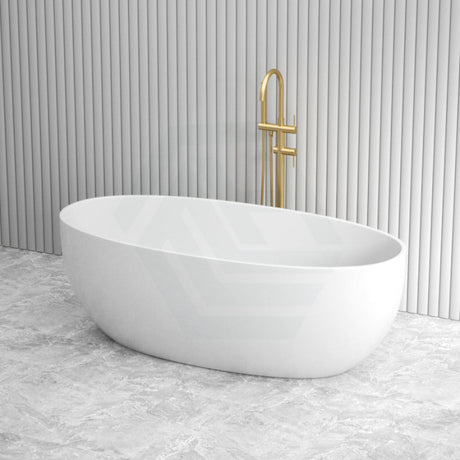
A freestanding bath is, by far, the best option for outdoor use. It does not require any walls or support from adjacent structures, which makes it very easy to position within your outdoor space. If you are planning for your outdoor bath to sit on a timber deck, it is important to check its weight limits. A filled cast iron bath can exceed 300kg, which may compromise the weight capacity of the deck. A concrete slab is the most structurally reliable base for heavier options.
Privacy is a key issue to factor in when installing a bath outdoors. A 1.8m timber slat privacy screen, a planted bamboo hedge, or a rendered garden wall are all suitable options. Incorporating privacy into your design is a very good idea — it will give you a genuine sense of seclusion that you would otherwise not have if left unscreened.

Materials, Weatherproofing and Durability
Once you have shortlisted a style and size, the next stage is to choose what material your outdoor bath should be constructed from. Outdoor bathing involves exposure to elements that a traditional indoor bathroom never encounters, including direct and extended UV exposure, humidity, and extreme fluctuations in weather conditions.
Acrylic with fibreglass reinforcement is the most commonly used material, with the widest range of designs and price options ($878–$7,182 across the range). It is relatively lightweight and warm to the touch, but prolonged UV exposure can cause surface degradation and colour fade. If you are planning on installing an acrylic outdoor bath without a shade covering, a sunshade is a must.
Stone resin is another strong option. This composite material — a mixture of stone dust and resin moulded into durable bath shells — handles temperature fluctuations well and resists UV fading far better than acrylic. Cast iron is a very tough and resilient material with excellent heat-retention properties; however, be aware that bare, unprotected metal around the waste outlet and the underside could rust in coastal or very humid conditions, so mention this to your supplier upfront. Concrete and stone baths are the most expensive options but are virtually immune to the weather. That said, their weight demands serious structural planning.
For any adjacent tiled or paved surface, waterproofing membranes must comply with AS 3740:2021 (AS 3740:2021), which sets out requirements for domestic wet-area waterproofing. Do not underestimate how important it is to comply with this standard — in most Australian states and territories, it is a legal requirement.

Installation, Plumbing and Site Preparation
It is one thing to select weatherproof materials, but another to have water supply and waste connections installed correctly. In all states and territories, all water supply and waste connections must be completed by a licensed plumber (state plumbing licensing legislation), and you should receive a compliance certificate on completion. Budget anywhere from $500 to $2,000 for plumbing, depending on the point of water supply and drainage on your site. Your hot water outlet must be limited to a maximum of 50°C (AS/NZS 3500.4) via an anti-scald tempering valve, and all tapware needs to carry WaterMark approval.
Your waste pipe will need a fall of at least 1:40 to the sewer or approved drainage point. If it does not, your bath will never drain completely and you risk ponding or water damage. As the waste outlets on claw foot bath styles connect to a floor waste just like any other freestanding bath, confirm where your drain will connect to the sewer and that the pipe slope is correct before installation — reconfiguring it afterwards will cost money. Lauxes linear drain is a great option for an outdoor floor waste, offering a clean, contemporary look. Any hardwired outdoor lighting will need to be installed by a licensed electrician (AS/NZS 3000:2018), who will provide RCD protection.

Outdoor Bath Styling and Setup Tips
Once the basics are established, there are all sorts of details to consider that will make the outdoor bath ideas a day-to-day reality. For privacy, timber slat screens at 1.8m tall are a fashionable option, bamboo fencing will provide a naturalistic feel and integrate with plantings, while toughened glass panels keep your views and sense of light. Overhead, a pergola will provide UV shelter and could accommodate a ceiling fan, whereas a shade sail is a budget alternative offering protection against prolonged sun exposure.
For paving surrounding the bath, any flooring exposed to water must comply with the slip rating requirements of AS 4586 for outdoor wet areas; textured porcelain and outdoor stone tiles are both slip-resistant options. A bath caddy to keep a book, drink or phone within reach is a useful accessory. Outdoor lighting rated to at least IP65 will make the bath more usable after dark and is safe for outdoor installation.
If you want to include an outdoor spa bath, be aware that any jets connect to hardwired power requires a licensed electrician to run the pump — so include this in your budget. Finally, a bath cover will keep leaves and debris out between uses and help retain water warmth. With a bit of planning, these outdoor bath ideas can make a genuinely positive addition to your home. For those still weighing up styles, a freestanding bath remains one of the most versatile choices for any outdoor setting.
References
AS 3740:2021 Waterproofing of Domestic Wet Areas, Standards Australia
State plumbing licensing legislation (VBA Victoria; Fair Trading NSW; QBCC Queensland; Building Practitioners Board WA; CBOS Tasmania; ACTPLA ACT; Building & Energy SA; ABPB NT)
AS/NZS 3500.4 Plumbing and Drainage — Heated Water Services, Standards Australia
AS/NZS 3000:2018 Electrical Installations (Wiring Rules), Standards Australia