14 May, 2026
Coastal Bathroom Ideas: Bringing the Beach Into Your Home
Discover coastal bathroom ideas that prioritise durability and style. Our Australian guide covers waterproofing, ventilation, and materials.

Video Credit: STINA'S HOME DECOR 101
What Makes a Coastal Bathroom Work: Key Design Principles
From my experience, a lot of time is spent on the "how" as opposed to the "why" in coastal bathrooms. The "how" in this instance is a question of visual language, where pale blues and natural textures are commonly thought of as the defining features. The trouble with this approach is that if you start with the "how" in mind, then there is a high risk you will end up with something that doesn't look as good as you planned it.
What the design needs to start with is function, durability. In the context of a coastal bathroom — particularly in high-humidity climates — this means ventilation, waterproofing, and material rating are prerequisites from the outset rather than afterthoughts once your tiles and taps have been selected.
Bathroom ventilation is paramount, even more so for coastal climates where ambient humidity is higher than in more temperate regions. NCC 2022 Housing Provisions, Part 10.8 states that windowless wet areas are required to provide a minimum exhaust rate of 25 L/s (NCC 2022, ABCB Housing Provisions, Part 10.8). In a coastal climate, I advise exceeding this 25 L/s minimum for ventilation. An under-specified exhaust fan is a classic omission in coastal renovation briefs; it will not appear visually in the scheme yet significantly contributes towards the ongoing deterioration of finishes and fittings in the space.
Material ratings too require careful attention. Not all tiles, not all cabinet substrates, and not all paints are suitable for continuous exposure to moisture. Correctly specifying these parameters from the beginning is the foundation of every successful coastal bathroom.

Coastal Bathroom Colour Schemes and Materials
With ventilation, waterproofing, and materials addressed, focus can now shift towards the visual language of the space. Coastal bathroom colour schemes are often characterised by a muted palette referencing nature: soft whites, chalky greys, warm sandy neutrals, and quiet blue-greens. I often recommend whites with a slight warm undertone rather than a cool stark white, which can feel clinical in natural light. Dulux Antique White USA and Taubmans Natural White both perform well in the coastal context. Feature walls, shower niches, or splash areas offer an opportunity to introduce a muted accent colour, such as a soft sage or dusty blue.
Tile selection is the key area that ties design to performance. Floor surfaces in any wet area should feature a matte or textured porcelain rather than a polished finish, which can be dangerously slippery when wet and presents slip-resistance considerations under AS 4586. Large-format porcelain in stone or marble looks — 600×1200mm — is currently the most popular option for coastal bathrooms, reducing grout lines and visual clutter. Subway tiles in 75×300mm or 100×300mm work well for wall applications, especially in Hamptons-adjacent schemes.
One critical but often forgotten detail: all waterproofing membranes behind tiles in wet areas must comply with AS 3740:2021 and NCC 2022 Part 10.2, with shower walls waterproofed to a minimum of 1800mm (NCC 2022, ABCB Housing Provisions, Part 10.2) above the floor substrate. It is a significant oversight to install beautiful tiles only for waterproofing failures to become apparent years later, at the cost of re-tiling the entire wet area.

Hamptons Bathroom Style: A Practical Australian Interpretation
Now that your palette and surface materials have been finalised, an opportunity exists to look further at how these relate to specific sub-styles of the overall coastal aesthetic. The hamptons bathroom is one of the most popular and accessible coastal interior styles achievable in an Australian home. When designing a Hamptons bathroom, you are really looking at a collection of specific design decisions: shaker cabinetry, subway wall cladding, chrome or brushed nickel tapware, and a built-in or freestanding bath that becomes the focal point. More than other coastal styles, the Hamptons look hinges on carefully crafted details — a shadow line in the cabinetry door, a framed mirror rather than a frameless floating mirror, and a substantial towel rail. Hamptons interiors are about thoughtful selections, and you feel the impact when compromises are made to cut costs.
Both Meir and Bella Vista offer strong tapware options in chrome or brushed nickel at a mid-to-premium price range. A basin mixer in the $200–$450 range from either brand suits a Hamptons bathroom without becoming the focus of the room. A freestanding bathtub is available from $878 and above from Broadway; you will need a minimum clear floor space of 1800mm around the tub, making it better suited to larger bathrooms.

How to Choose a Coastal Bathroom Vanity
Whatever coastal bathroom ideas you are working with, the vanity is usually the focal point of the bathroom and deserves careful consideration.
Vanity cabinet material is an important factor. PVC board offers a waterproof construction and suits a guest bathroom where budget is a priority. MDF board is not recommended for a coastal bathroom as it is not moisture-resistant and requires careful treatment at all joints. The Aulic plywood range, made in Australia, is a premium option constructed from genuinely moisture-resistant plywood with an authentic timber-grain finish that suits coastal room design well. A warm-toned wood bathroom vanity creates a very different focal point to painted cabinetry and brings a natural warmth that paint alone cannot replicate.
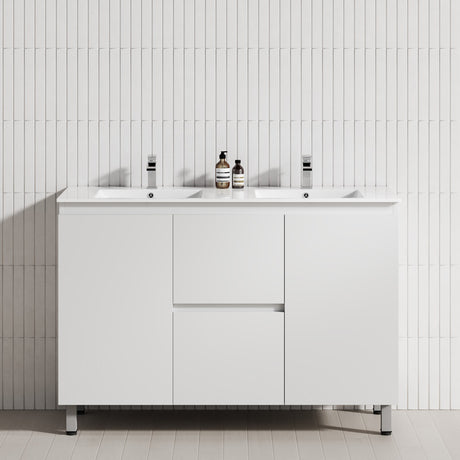
Vanities typically range from 600mm to 1800mm wide. A 900mm single vanity works well in most main bathrooms, while a double vanity from 1200mm suits a master ensuite. A timber bathroom cabinet with a stone basin top can act as a strong feature within the space. Both Lukka and CETO offer coastal-style vanities in wall-mounted and freestanding formats, ranging from $238 to $2,828. Note that vanity cabinets rarely include a basin mixer or waste — budget for these separately.

Finishing Touches: Fixtures, Storage, and Neutral Bathroom Ideas
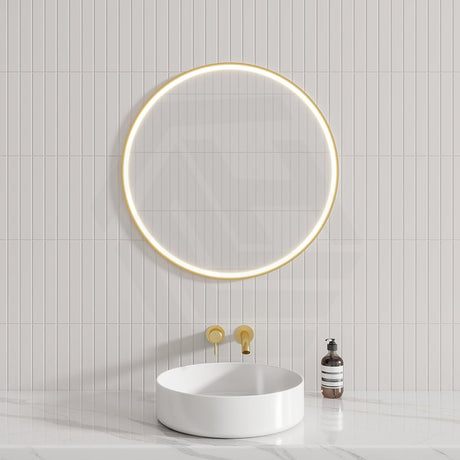
The finish of your tapware is where a bathroom's colour scheme can come together or fall apart. Chrome is the most versatile finish, with timeless appeal for a coastal or Hamptons bathroom — currently with 1,384 products available in the range. Brushed nickel is a softer, warmer alternative that pairs well with timber cabinetry. Brushed gold suits a warmer, sandier palette but requires towel rails, mirror frames, and accessories to match.
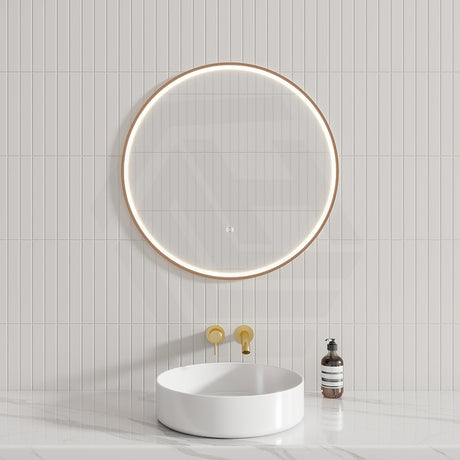
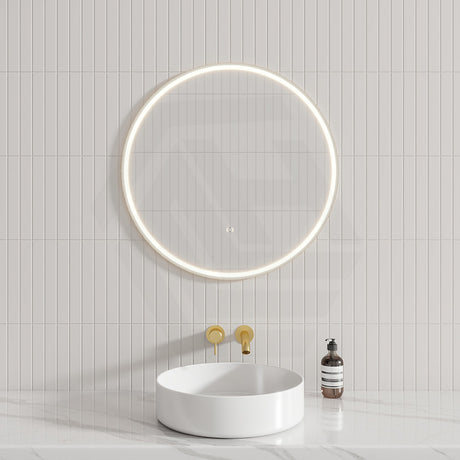
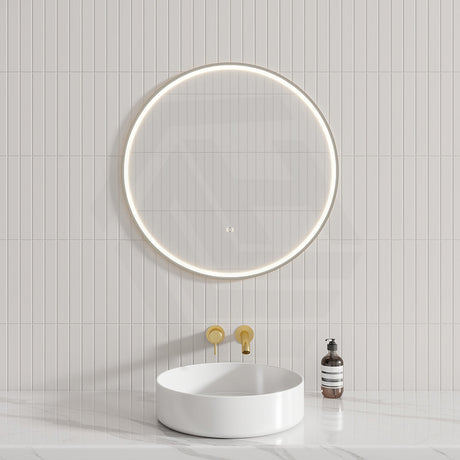
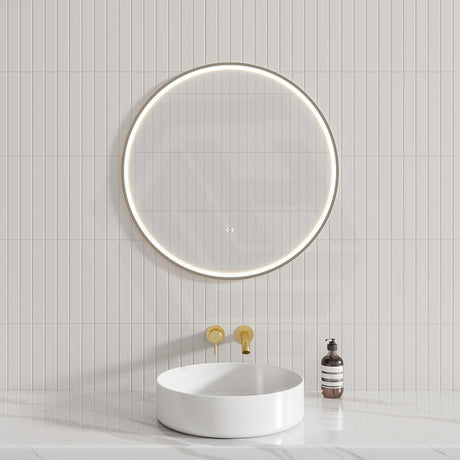
A hardwood bathroom vanity with shelving below offers a functional and visually cohesive storage solution in a coastal bathroom. Open shelving allows easy everyday access and extends the natural timber character of the space. Complement your vanity with a framed LED mirror — hardwired by a licensed electrician in accordance with AS/NZS 3000:2018 electrical bathroom zone requirements — a wall-hung towel rail in the same metal finish, a frameless 10mm tempered glass walk-in shower screen in accordance with AS/NZS 2208, and a few accessories in natural textured finishes.
Neutral bathroom ideas deserve special consideration for their practicality and versatility. A base palette of warm white, stone tones, and soft linens provides an enduring, low-maintenance foundation that can be refreshed simply by changing out accessories. Among the broader range of coastal bathroom ideas, a direction towards neutral bathroom ideas is a considered, refined design choice — not a lack of confidence when executed well.
References
National Construction Code 2022, ABCB Housing Provisions, Part 10.8 Condensation Management
National Construction Code 2022, ABCB Housing Provisions, Part 10.2 Wet Areas
AS 3740:2021 Waterproofing of Domestic Wet Areas, Standards Australia
AS/NZS 3000:2018 Electrical Installations (Wiring Rules), Standards Australia