

12 May, 2026
Bathroom Renovation Cost in Australia: Complete Pricing Guide
Planning a bathroom renovation? Our Australian pricing guide breaks down bathroom renovation cost by size, age and materials.

Video Credit: Fifi McGee | Interior Design & Renovations
What Drives Bathroom Renovation Cost in Australia?
It is so easy to dream of that bathroom you have always desired. The new tiles, the gorgeous new vanity and that amazing shower you always thought you wanted are within your reach, you just need a better understanding of what is behind the figures for renovating your bathroom.
One of the biggest factors affecting your bathroom renovation cost in Australia is the size. If your bathroom is a smaller ensuite at 3 to 4 square metres, then it will cost less to tile and waterproof it than a family-sized bathroom at 8 to 10 square metres. However, the age of the house can make a huge difference in the pricing for your bathroom renovation. If the property is an older house, the owner will often find that the house has older and outdated waterproofing, plumbing and may even contain asbestos which has to be removed by licensed tradespeople to safely work in the property. These can result in many thousands being added to your costs almost instantly.
Another factor to consider is location. Renovating in a major city such as Sydney or Melbourne can be significantly more expensive in labour than a project in a regional location. The difference in labour can be up to 20 to 30 per cent more for the same scope of work, depending on the market. Another factor to consider is any change of layout or plumbing. If the renovation is moving the toilet, drainage or a wet area then there will be an increase in plumbing and consequently in bathroom renovation cost. The closer the renovation work is to your existing layout, the lower the cost will be.
When we understand the above factors, it helps to explain the below figures of Australian renovation costs by size and scope.

Typical Cost Ranges by Renovation Scope
So, how much does a bathroom renovation cost in Australia right now? The quick answer is, it all depends. Here is the typical price range for bathroom renovating in Australia.
A cosmetic only renovation that includes a new vanity, new tapware, new accessories and paintwork without any demolition or re-tiling will cost from $5,000 to $10,000. This category is for bathrooms that are in good condition and are simply being given an update in design.
Renovations that require a full bathroom renovation such as removing and re-tiling, new vanities, tapware, toilet suite and new shower screens will typically cost $10,000 to $20,000. This price range for full bathroom renovation costs is in line with industry averages in Australia. A full bathroom renovation cost is typically between $2,300 to $4,600 per m² (HIA Bathroom Renovation Cost Guide 2025) depending on finishes and location. Bathroom renovations in Sydney and Melbourne are usually on the high end of these ranges; Adelaide and Brisbane tend to be on the lower end.
For premium bathroom renovations or structural bathroom renovations that include moving layouts, new freestanding baths and frameless screens or designer bathroom finishes you will generally start to see costs of $20,000 and beyond. These renovations are for large full bathrooms with high-end finishes that can exceed $35,000. These projects truly transform the space.
While the total cost range is a good baseline, knowing exactly where those costs will go, and where the potential for an overspend could hit you hardest, will enable you to set up an itemised budget that actually reflects reality.

Breaking Down the Budget: Labour, Materials and Fixtures
Tiling will normally be your single largest trade expense. Expect to spend $35 to $120 per square metre for tile supply, with a further $50 to $70 per square metre just for installing the tile. For a standard 6 m² bathroom, that adds up quickly. Waterproofing work cannot be neglected. Any licensed waterproofer doing this work is required to ensure shower walls are waterproofed to at least 1800 mm above the floor substrate (NCC 2022, ABCB Housing Provisions, Part 10.2) (AS 3740:2021). Expect to pay $50 to $80 per square metre. Never skip this cost.
Expect plumbing to account for 20 to 25 per cent of your overall bathroom renovation cost. Licensed plumbers usually charge between $80 and $120 per hour, depending on which state they operate in, and the full bathroom fit-off — the fitting out of the toilet suite, basin, shower mixer and bath — will usually take two to three days split between rough-in and fit-off visits. Electrical work, like adding an exhaust fan, LED mirrors and a heated towel rail, must also be performed by a licensed electrician, and you should ensure RCD protection on all circuits. Budget 10 to 15 per cent of your total for this.
Fixtures like vanities, toilet suites, shower screens and tapware usually comprise 25 to 30 per cent of the total cost. Common causes of budget blowouts are: asbestos removal costs, which should be $1,500 to $3,000 for any home built before 1990; the need to re-route drainage due to unforeseen circumstances; and old waterproofing that has failed and must be fully stripped and redone.
Once you understand how the budget will be spent across each of these categories, it is time to select the fixtures and fittings that provide the best value.

Selecting Fixtures and Vanities That Work for Your Budget
This is where your personal style can really show, and where smart decisions can take a mid-range renovation into a high-end finish. Start with the vanity, as it is what most people look at first in your bathroom.
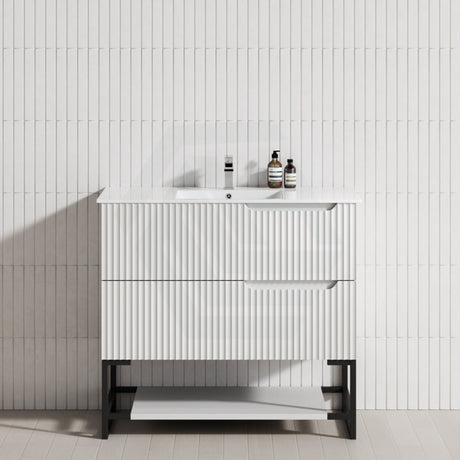
Vanity widths in Australia run between 600 mm for a single basin and 1500 mm for a double, or more. Cabinet material is important for both durability and price: PVC cabinetry is effectively waterproof and therefore very suitable for a bathroom, MDF is a mid-range option and takes painted surfaces very well, and solid timber and plywood are higher-end finishes. A wall hung vanity is one of the most popular styles in modern Australian bathrooms — suspended above the floor, it opens up the room visually and makes floor cleaning easier. Picture a wall hanging bathroom vanity painted matte white, framed against large-format porcelain tiles. It is exactly the sort of pairing that looks stunning in a photograph, but even more compelling in person.
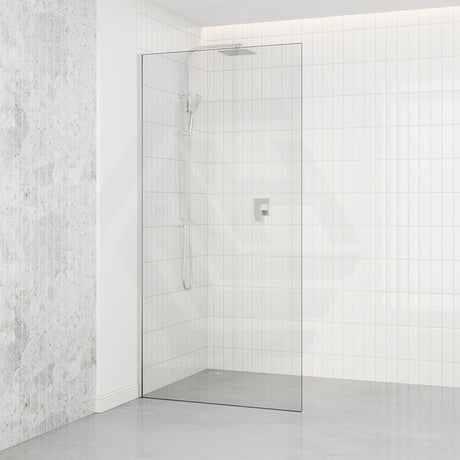
Inexpensive PVC vanities range from $300 to $600. MDF and plywood vanity cabinets will run between $600 and $1,200, and higher-end, Australian-manufactured vanities such as Aulic or CETO start at $2,800. For tapware, Meir sits at the premium end, with Fienza and Bella Vista offering great mid-price options. A framed shower screen is installed from around $400 to $600, and a frameless shower screen starts at $800 and is constructed in 10 mm thick tempered safety glass certified to AS/NZS 2208, with wider configurations climbing to $2,550.
Once you have chosen your fittings and fixtures and locked down your budget, you are ready to begin the renovation. Completing tasks in the correct order is essential to avoid expensive rectification work and compliance issues.

Bathroom Renovation Steps and Checklist
The order of tasks is everything. Below is the bathroom renovation checklist and bathroom renovation steps for a quality project.
Step one is demolition of existing materials and removal of waste, during which your contractors will remove old tiles, fittings and debris. Step two is checking and repairing the subfloor and wall framing — this is especially important where moisture damage is evident. Step three is waterproofing, performed by a licensed waterproofer who will waterproof the shower base, the shower walls to 1800 mm height, and the floor-wall junctions with a membrane to the horizontal flange at a minimum of 40 mm. Waterproofing must be allowed to cure completely before any tiling takes place — this step can never be skipped or cut short.
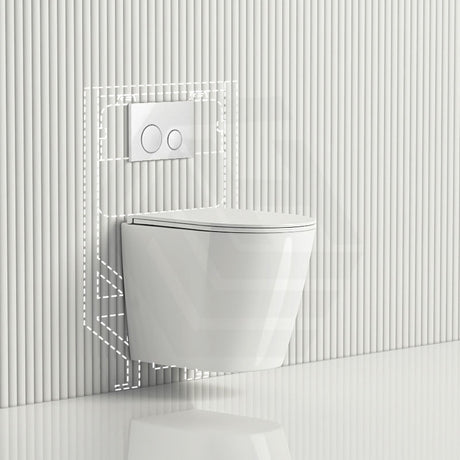
Step four is rough-in plumbing and rough-in electrical: your plumber will rough-in water and waste, and your electrician will wire new lighting, exhaust and any additional services such as heated towel rails. Step five is tiling, with the floor completed first. Step six is fixture installation — shower screens, toilet suite, vanity, basin and tapware. This is also a great opportunity to introduce vintage bathroom vanities to add character and warmth to the space. Step seven sees your plumber return to complete final fixture connections, and your electrician finalise all electrical connections with RCD protection. Step eight is the final inspection and compliance certificate, which in most Australian states must be completed by your licensed plumber upon completion — check your state or territory requirements.
Your bathroom renovation checklist should confirm that waterproofing membranes have been inspected and certified, tiles have been set and grouted, all fittings and fixtures are connected and operational, the exhaust fan is working, and the floor has been cleaned down. Once your contractors are off the job, you can step into your new bathroom without needing to call anyone back. That is the very best result.
References
HIA (Housing Industry Association) — Bathroom Renovation Cost Guide 2025
AS 3740:2021 Waterproofing of Domestic Wet Areas, Standards Australia
National Construction Code 2022, ABCB Housing Provisions, Part 10.2 Wet Areas
AS/NZS 3000:2018 Electrical Installations (Wiring Rules), Standards Australia
State plumbing licensing legislation (VBA Victoria; Fair Trading NSW; QBCC Queensland; Building Practitioners Board WA; CBOS Tasmania; ACTPLA ACT; Building & Energy SA; ABPB NT)