15 May, 2026
Bathroom Feature Wall: Ideas to Add a Striking Focal Point
Transform your bathroom with a stunning feature wall. Explore placement ideas, materials and design tips to create real impact in your Australian home.

Video Credit: Design. Build. Style.
Picture walking into your bathroom and having a wall that demands to be looked at. Dramatic. Stunning. Deliberate. A bathroom feature wall is designed to achieve precisely that; it adds that extra spark to a room and gives the bathroom character and interest.
What Makes a Bathroom Feature Wall Work
There are a limited number of places that will work well for a bathroom feature wall and that is usually the wall behind the vanity or the wall that the foot of the freestanding bath sits upon. Feature walls have been a bathroom trend for some years now because they have the greatest impact in a room as this is where the eye is most likely to rest on first.
You would typically choose one and only one wall for this, however, because of cost and maintenance reasons and because for smaller Australian bathrooms you would not wish to reduce any further the amount of space that a room already has so as to not create a claustrophobic, dark room. This is where you are weighing up your space and your budget to decide which materials are best suited and will create the perfect bathroom feature wall and not an expensive regret.
And, of course, it is also good practice to ensure that you have the appropriate exhaust fan fitted to your bathroom — windowless wet rooms need a minimum of 25 L/s (NCC 2022, ABCB Housing Provisions, Part 10.8) extraction to deal with condensation and protect your feature wall surface over time.
With that done, the next most important thing that needs to be considered, which will again affect the budget the most, is what materials you are going to use.

Best Materials for a Bathroom Feature Wall
If you are looking to create a feature wall in your bathroom, then your first option is porcelain tile. Porcelain tiles are the main material used in Australian bathrooms due to the fact that they are fired at a higher temperature compared to standard ceramic tile making them much harder wearing and less porous which is perfect for a wet room feature wall.
Natural stone is also suitable for this purpose. Marble or travertine are both beautiful and naturally occurring stones however, they do need to be sealed regularly which makes them more suitable for the drier areas of a bathroom.
Large-format porcelain slabs (600×1200 mm) are currently a strong trend in bathroom design as they give you the illusion of one large surface with a minimum of grout jointing. Timber panels and textured renders can look lovely when used in dry areas but if you wish to use either in the shower you must be sure to waterproof correctly. Every item you put in the shower must meet the waterproofing membrane standards outlined in AS 3740:2021, the referenced alternative solution to compliance found in the NCC. Be sure to get a licensed waterproofer involved; don't just buy a DIY waterproofing kit.
Material costs can span quite widely. DW Tile and Everstone offer porcelain tiles starting at just $6 per piece for a standard format, up to $698 per piece for a large-format, high-end product. Onix glass mosaics range from $12–$241 per piece. Be sure to factor in installation costs, too, before settling on a material. Tiles remain the number-one bathroom wall cladding material in Australia, so spend some time exploring the different formats, patterns and sizes that could work best in your feature wall.

Bathroom Tile Ideas for Feature Walls
The tiles you choose will help establish the mood and character of the space. Subway tiles, which measure 75×300 mm or 100×300 mm in Australia, are flexible, suitable for a classic brick-bond layout or stacked vertically for a more modern and elongated look.
Large-format rectified tiles (600×1200 mm or 600×600 mm) are a strong fit for a sleek, minimalist look thanks to their precise edges, meaning grout lines can be as slim as 1.5 mm. Onix glass mosaics can work as a decorative inlay, or create an accent panel on a feature wall. Remember to order an additional 10 to 15 percent for cutting waste, with the note that a larger format may warrant a higher percentage as there are fewer opportunities to use off-cuts.
It's also worth giving some thought to the type of grouting you'll use in a wet space. Epoxy products offer better water and stain resistance than cement-based grouts. And, whatever tile format and grouting pattern you go with, it's common practice for homeowners to repeat the look on a bathroom splashback, a space that's small but well-placed in terms of prominence for featuring materials and format. Allow at least 24 hours after adhesive has set before grouting to ensure a sound bond.

Bathroom Splashback Ideas and Vanity Styling
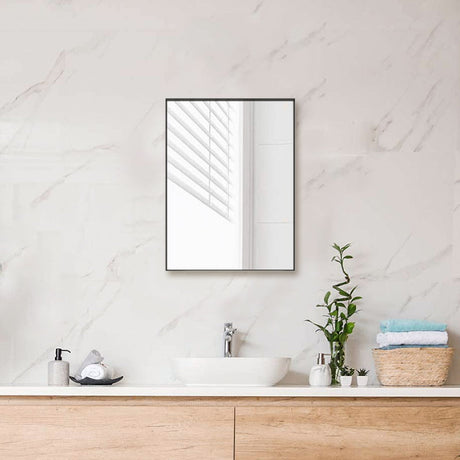
The vanity splashback is one of the more common bathroom splashback ideas here in Australia; a contained, practical area for introducing pattern and texture, without overpowering a bathroom. This area is generally 600 mm from the top of the vanity benchtop to the bottom of either the mirror or wall cabinet and looks good in stone-look porcelain or a full glass feature panel.
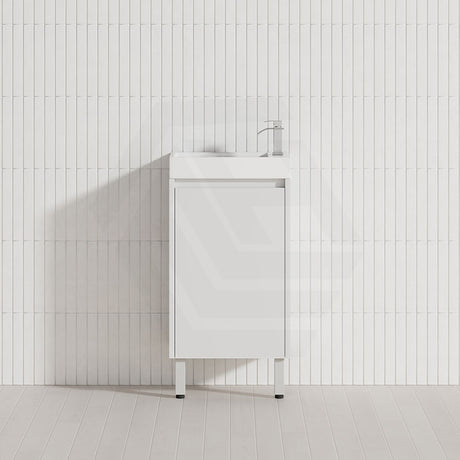
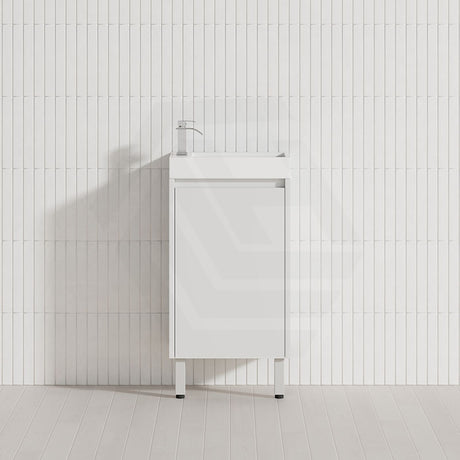
Consider your splashback coverage based on the size of the vanity and the distance the vanity sits from the wall. A thin bathroom vanity placed closer to the wall will highlight your choice of tile or stone. The best combination of slimline bathroom vanity and full-height tiling using a large-format tile will be the ideal choice for smaller bathrooms. Brands such as Lukka and CETO offer plenty of wall-hung vanity options in a range of widths that will suit this design. In addition, a slim bathroom vanity will help the splashback remain proportionally generous. It is worth noting that the basin mixer and waste are usually not supplied with the vanity and require a budgeted expense.

Bathroom Wall Ideas: Layout, Sizing and Installation Tips
Often, whether it be preparation of the wall substrate or the layout of tiles, this initial stage is forgotten or compromised but can be the factor that makes or breaks your feature wall, particularly in wet areas. A waterproofing membrane is required in wet areas and it must be installed and applied by a licensed waterproofer. In addition to shower walls being waterproofed to a height of at least 1800 mm (NCC 2022, ABCB Housing Provisions, Part 10.2) above floor substrate level, walls adjoining a bath must be waterproofed to a height of at least 150 mm above bath rim and the wall-to-floor junction must feature a horizontal flashing of no less than 40 mm. A minimum curing time of 24 to 48 hours is required for waterproofing membrane before any tile adhesive can be applied.
With waterproofing done, calculate your tile layout before any tile adhesive is mixed up. Use a laser level because grout joints will stand out when there is a misalignment on the feature tiled wall. You will need to determine the height of the feature wall tiling. Do you want a full-height, floor-to-ceiling tiled wall as is more popular in contemporary spaces and feels more luxurious, or do you want a dado-height tiled wall up to 1200 mm with walls above painted or wallpapered? Although more budget-friendly, a dado-height tiled wall can also be a considered design feature. If you plan on installing a slim bathroom vanity against your feature wall, ensure that the wall is plumb; a wall that is not plumb will prevent the vanity from sitting against it correctly. Tiling is one of the areas of a bathroom renovation where a confident DIYer may attempt to tackle but with large-format tiles of 600×1200 mm size, it is highly recommended that a licensed tiler carries out the installation as a completely flat substrate and expert handling are required to achieve a quality finished surface. Additionally, any LED mirrors and other backlit features must be installed by a licensed electrician in accordance with AS/NZS 3000:2018. Get these bathroom wall ideas right and the outcome will be a space that you will be proud to live in.
References
National Construction Code 2022, ABCB Housing Provisions, Part 10.8 Condensation Management
AS 3740:2021 Waterproofing of Domestic Wet Areas, Standards Australia
National Construction Code 2022, ABCB Housing Provisions, Part 10.2 Wet Areas
AS/NZS 3000:2018 Electrical Installations (Wiring Rules), Standards Australia