

28 April, 2026
Small Bathroom Layout Guide: Floor Plans That Maximise Every Centimetre
Small bathroom layout ideas to maximise every centimetre: smart floor plans, wall-hung fixtures, frameless showers and clever clearances. Practical tips for compact Australian bathrooms that feel spacious.

How small is too small? (The real minimum dimensions)
What no one ever mentions when it comes to tiny bathroom design is that there is, actually, a threshold. Below a certain size, you just can't have a bathroom any more. I've been on home opens where someone's put a shower, toilet and vanity into what really is just a cupboard and can't even fit their elbows into.
The absolute smallest viable bathroom size in Australia is around 2.4m x 1.5m, so 3.6m2. The toilet needs 200mm clear on each side, plus 600mm clear in front; the shower entry needs to be no narrower than 750mm.
For small bathroom dimensions, what actually matters isn't the total area. It's clearances. A 4m2 bathroom with bad clearances can feel worse than a 3m2 one that's got everything positioned right. This is where bathroom dimensions Australia comes in handy. The National Construction Code sets a minimum 820mm clear opening for bathroom doors (NCC 2022, ABCB Housing Provisions, Part 12.2), a good starting reference point.

Four floor plan layouts that actually work in tight bathrooms
All small bathrooms are not created equal. The best shape of room depends on the fixtures you want in it.
In the single-wall or linear layout, you line everything up on one wall: vanity, toilet, then shower at the far end. It's probably best for rooms under 1.6m wide. It also keeps all plumbing on a single run, which your plumber will appreciate at quote time.
The L-shape layout is where the shower is tucked away into a corner and you run your vanity and toilet along the adjacent wall. This is perhaps the most common small bathroom layout in houses built after the 1990s.
A galley layout is where you've put fixtures on opposing walls, vanity on one side, toilet and shower on the other. It requires a bit more room: at least 1.8m wide to fit the 600mm passage way in-between.
And the wet room. No shower screen, no hob, just a fully tiled floor with a central drain. Every last centimetre becomes usable. The shower is the room. The wet room can be more expensive to waterproof but, if your bathroom size requirements are super-tight, it's the most honest answer.

The fixtures that earn their place in a small bathroom
In a small bathroom space, every item in it needs to justify its place by the amount of floor space it takes up.
Wall-hung toilets are the best space saver for tight rooms. It means hiding the cistern inside the wall cavity, returning 150 to 200 mm of visual depth over a standard floor-mounted toilet suite. Wall-hung pans start at around $303.
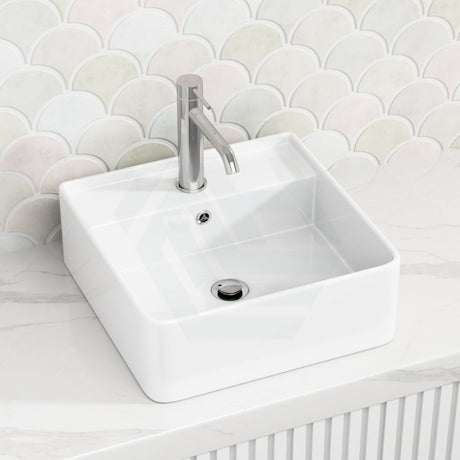
You can do a similar thing with a wall-hung vanity. As you free the cabinet up from the floor, you can store items underneath it while the overall room will appear more generous. For smaller rooms, the narrow 400 to 600 mm wall-mounted vanities do the trick, and they'll have a functional basin and decent drawer space. Narrow wall-hung models are available from Lukka and CETO in this size.
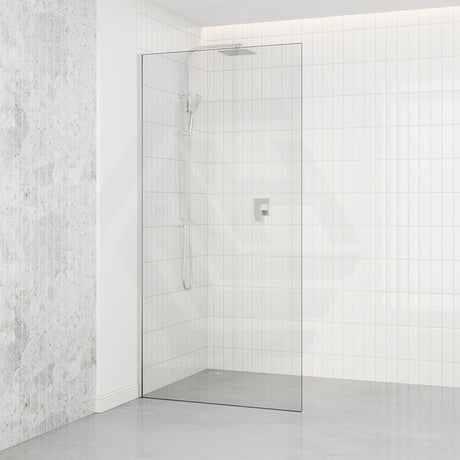
A frameless walk-in screen, with a fixed panel of 10 mm glass beginning from approximately $130, provides an open entry with no door to swing.

Clearances, door swings and the details most people forget
Start by establishing the door swing requirement. A standard hinge needs a clear arc of 820 mm inside the bathroom and will inevitably knock into something in a confined space. The solution is a pocket door that disappears behind the wall or a barn-style sliding door mounted on an external track.
You also need to know the correct toilet clearances. There needs to be 200 mm minimum on each side to allow for leg room and 600 mm in front as the minimum requirement.
Small bathroom vanities for small bathrooms range in width from 400 mm and up. A 600 mm vanity is the minimum I would suggest for a main bathroom, as it will house a standard ceramic basin and have at least one drawer underneath. Ensure any drawers you fit are facing into a corner or otherwise dead area rather than into a door swing.

Making a small bathroom feel bigger without moving a single wall
Large format tiles in sizes of 600 by 600 mm or greater significantly reduce the number of grout lines and make the flooring look like a single surface. Run the same tiles from the floor into the shower area without changing type or colour.
A frameless glass panel for the shower screen lets light permeate the room. Fitting a bath vanity corner into the space will free up awkward wasted area that almost no design ever uses. Corner vanities fit into the junction of two walls and free up the main wall area.
The most popular size of single vanity in the Australian market is the 900mm vanities wide variety. These are perfect for small bathrooms between 4 to 6 square metres in size.
Large and light-coloured palettes can make a room feel larger, but the real trick is one large mirror above the vanity with no gap between them. This will effectively double the visual depth of the wall behind you.
References
National Construction Code 2022, ABCB Housing Provisions, Part 12.2 Livable Housing