13 May, 2026
Ensuite Bathroom Ideas: Design Inspiration for Every Style
Discover ensuite bathroom ideas for every style. Get practical design inspiration to plan your perfect Australian bathroom renovation.

Video Credit: Sophie Paterson
There's a specific kind of magic that comes from a perfectly designed ensuite. It's an entirely private room, a space that you alone control — the first part of your day in the morning and the last part before you rest. I have been in the midst of a bathroom renovation myself, and I understand the stress involved at the planning stage. But I also know how rewarding an ensuite bathroom can be when you've considered all the details properly. These ensuite bathroom ideas have been curated to help you get directly to the good stuff.
What Makes a Great Ensuite Bathroom Layout
Before you get too attached to a particular tile or tapware finish (and you will, as there are so many to choose from!), the overall layout needs to be thought out first. Most ensuite bathrooms are between 2 and 4 square metres in floor area and, in that context, you need to be aware that each design decision has consequences.
First, the wet zone — your shower, and a bath if you have one — needs to be located from day one in accordance with waterproofing requirements. The National Construction Code requires shower walls be waterproofed at least 1,800mm (NCC 2022, ABCB Housing Provisions, Part 10.2) above the floor substrate, and the wall-to-floor junction requires a flashing horizontal leg of at least 40mm. A licensed waterproofer should carry out this work — this is not something to skimp on.
You should also be mindful of where your ensuite bathroom door swings clear of the vanity and toilet, or whether a sliding or pivot door is better suited to the room. Ventilation requirements are important too: an ensuite without a window must have a mechanical exhaust fan with a minimum extraction rate of 25 litres per second. Your builder or plumber should have in-depth knowledge of these requirements, but arriving at those conversations already knowing the basics will help you get the most out of them.
The constraints of your ensuite bathroom design are even tighter when the room is small, so here are some small ensuite ideas for getting the most out of compact spaces without sacrificing function.

Small Ensuite Ideas: Maximising Space Without Sacrificing Function
It's entirely possible to design a small ensuite that doesn't feel cramped — it can even look quite luxurious. The choice of fixtures and fittings makes all the difference. In fact, some of the most beautifully designed ensuite bathrooms I have seen have been the smallest ones.
A wall-hung vanity is, hands down, the best space-saving move you can make. With no cabinet bulk sitting on the floor, the room reads as more open and a quick mop underneath takes seconds. For most ensuites, 750mm is a solid starting width for a wall-hung unit — drop to 600mm only when the space genuinely demands it. Solid studs or timber blocking behind the wall are non-negotiable for a wall-hung vanity — get your builder across that early in the design stage.
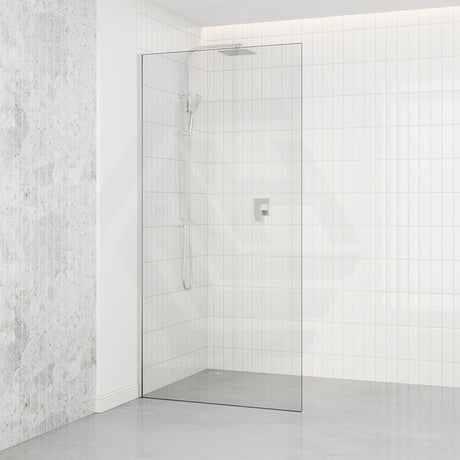
Swap the pivot door for a frameless walk-in screen with a fixed panel — it strips out visual weight and the room suddenly feels much bigger. AS/NZS 2208 safety glazing standards apply to the glass — your supplier should confirm compliance, though it's always worth raising it yourself. A recess depth of at least 900mm is what you need for a comfortable shower experience. Large-format porcelain tiles — 600mm x 600mm or bigger — cut down on grout lines and give the floor a far more seamless, open look; 600mm is really the minimum worth considering. Finishes get all the attention, but circulation space — especially around the doorway — matters every bit as much.
Bathroom doorways should provide an 820mm (NCC 2022, ABCB Housing Provisions, Part 12.2) clear opening — that's the livable housing benchmark, and good practice whether or not your build is formally subject to those rules. A recessed shower niche keeps the floor clear and the lines clean — far tidier than freestanding shelving bolted to the wall. With small ensuites, it really does come down to the details.
With the spatial groundwork laid, it's time to settle on a design aesthetic that pulls your materials and finishes into a coherent whole.

Ensuite Design Styles: Minimalist Through to Classic
Three directions dominate the Australian ensuite market right now — minimalist, Japandi, and coastal — though classic never really goes away. Each style carries its own material palette, and locking in a direction early makes every subsequent decision a lot easier.
Warm-toned matte porcelain tiles, timber-veneer vanity cabinets — Aulic builds theirs on premium plywood, so the cabinet holds up well in a moisture-heavy room — and brushed nickel or brushed gold fixtures are the hallmarks of both minimalist and Japandi styles. Done well, the result is calm, clean-lined, and genuinely restful.
Coastal design has made a real comeback lately. Textured ceramic wall tiles, white or light sage cabinetry, and chrome or brushed nickel fixtures define the look — fresh, unfussy, and a breeze to keep clean.
Classic design holds its ground because the appeal simply doesn't fade. White ceramic subway tiles, engineered stone benchtops, and chrome fittings are the usual building blocks. It photographs well, sells well, and won't look tired in five years — a safe bet if resale value is part of the brief.
Whatever style you land on, the vanity cabinet tends to be the piece that defines the whole room — it warrants serious thought.

Bathroom Vanity Ideas: How to Pick the Right Vanity for Your Ensuite
Your vanity is what the eye goes to first in any ensuite. Walk in the door and it's right there — and it's the fixture you'll use more than anything else, every single day. The ideas below are here to help you land on a vanity that works as hard as it looks good.
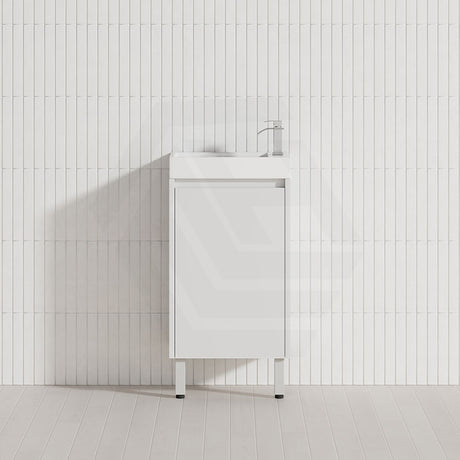
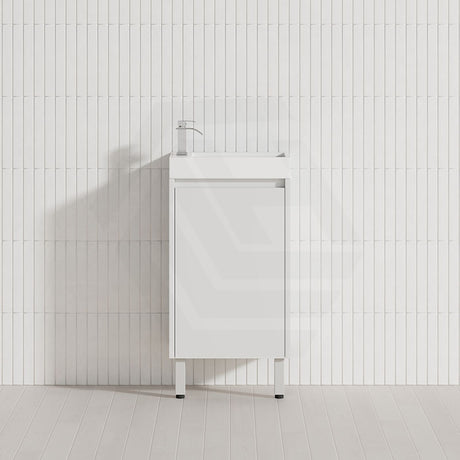
Wall-hung cabinets are still the go-to for modern ensuites, but floor-standing cabinetry and freestanding bathroom vanity options have surged back into favour across a wide range of styles. Legs and a furniture-like silhouette give a freestanding vanity a warmth and character that wall-hung units often can't match. There's a genuinely impressive spread of freestanding bathroom vanities out there, covering all price points and specs.
The quality of the cabinet material makes a real difference. PVC sits at the affordable end and is fully waterproof — perfectly fine for a straightforward renovation. Mid-range cabinets often use melamine-faced MDF, which is widely available but won't handle moisture the way PVC will. For a room that deals with moisture every day, premium plywood construction — the approach taken by Aulic and CETO — is the strongest and most humidity-resistant choice on the market.
Benchtop and basin are two separate calls to make. Engineered stone is the go-to benchtop material, and it comes in a huge range of colours and finishes. A vessel basin perched above the counter makes a real statement — a shapely ceramic one against a timber-look cabinet can look genuinely elegant. Most above-counter basins have no tap hole — unlike under-counter models — which means the basin mixer goes straight into the benchtop. Stone and concrete basins carry real weight, and the vanity cabinet needs to be rated for it — check the product specs before you commit. Worth knowing: the vanity typically comes without a basin mixer or waste fitting, so budget for those separately. With the vanity locked in, the rest of your fixtures and fittings should follow in a finish that works with it.

The Finishing Touches: Fixtures, Fittings, and Practical Upgrades
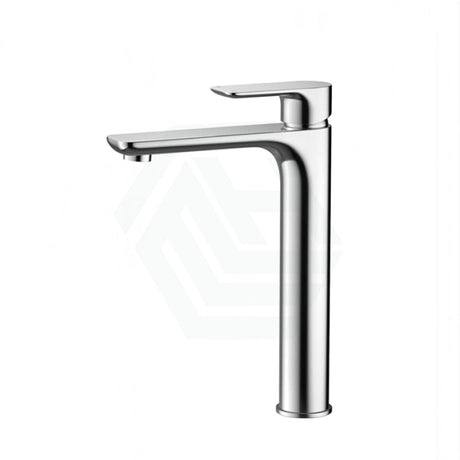
This is where it all clicks into place — and the small calls matter more than you'd think. There's one rule worth following above all others: keep finishes consistent across the whole bathroom suite. Go matte black on the basin mixer and the towel rail, robe hooks, and shower head all need to follow suit. Matte black is still Australia's top-selling finish, though brushed gold and brushed nickel are closing the gap fast. Across matte black, brushed gold, and brushed nickel, Meir has a solid premium-tier tapware range worth a look. A shower head with a 3-star WELS rating hits the sweet spot between decent pressure and real water efficiency.
A heated towel rail seems like an indulgence right up until you've used one — after that, there's no going back. ThermoGroup is the specialist here, with electric, wall-mounted, and timer-controlled models well suited to an ensuite. A licensed electrician is required for installation — same goes for an LED mirror, which has to be hardwired through RCD protection under AS/NZS 3000:2018. When picking a mirror, SAA certification is what you're after. Prices on LED mirrors start at $178 for a basic round model and climb to around $800 for a larger mirror-shaving cabinet with built-in storage and lighting — money well spent in a compact ensuite.
Underfloor heating deserves a place on your list too. Large-format porcelain tiles and underfloor heating are a natural match, and stepping onto a warm floor on a winter morning is hard to argue with. A concrete slab is simple enough to work with; a timber subfloor needs a different approach, so raise it with your builder early. Get the freestanding vanity, underfloor heating, and LED mirror right, and your ensuite becomes a room you actually want to spend time in — that's the whole point, isn't it.
References
National Construction Code 2022, ABCB Housing Provisions, Part 10.2 Wet Areas
National Construction Code 2022, ABCB Housing Provisions, Part 12.2 Livable Housing
AS/NZS 3000:2018 Electrical Installations (Wiring Rules), Standards Australia