15 May, 2026
Standard Vanity Height in Australia: What You Need to Know
What is the standard vanity height in Australia? It's 860 mm — and knowing why it changed could improve your next bathroom renovation.

Video Credit: Build with Ferguson
What Is the Standard Vanity Height in Australia?
When you're doing your bathroom renovation, the height of your vanity is a decision that seems insignificant until you end up hunching over it day-in and day-out for the next 10 years. Yet most people leave it for last, usually when the plumber is in and there's no time to change anything.
What then is the standard vanity height in Australia? At the time of publication, this is 860 mm from the finished floor to the top of the benchtop. This is the measurement you will most likely find in all catalogues and, in fact, the height has now moved from the historical 750 mm which was the previous Australian bathroom standard. Previously, 750 mm was known as "comfort height" but this term has now been reversed and applies to a vanity that is higher. Back when vanities were much shorter, they were more shallow in depth and this suited a different kind of bathroom and user.
The 860 mm standard vanity height has become the industry default for new builds and renovations as it suits a range of average adults without them needing to bend. While some designers advocate for 900 mm for a household where occupants are taller, it's not unusual.

How Bathroom Vanity Dimensions Affect Comfort and Function
Once you've understood this standard measurement, understanding how it interacts with other factors such as benchtop depth, overall width, and who will be using the vanity at any given time can turn these specifications into a more ergonomic and functional bathroom.
In most cases, the overall bench depth will be 450 mm, though some options may vary anywhere between 460 mm to 550 mm in wider formats. However, when looking at vanity widths, these typically vary and can be anywhere from 400 mm (ideal for a powder room) right up to 1800 mm for a double configuration. While standard vanity heights remain the same, the overall width and bench depth vary. Together these make up the overall bathroom vanity dimensions.
With regards to ergonomics, 860 mm places most people's wrists at the appropriate level for face washing or brushing teeth; neither fully at elbow height, yet not so low that the upper back rounds. For the kids this obviously isn't ideal and this is where wall-hung vanities come into play. The other consideration to factor in here is accessibility. The National Construction Code 2022 Livable Housing requirements set out some requirements for new Class 1a dwellings with regards to bathroom access including the required clear floor zones — worth a read for new builds or extensive renovations.
In addition, the height of your vanity does not just affect comfort; the height of your vanity will determine water splash. If the basin is too low, your water will splash back towards you. If it's too high, you will also be contending with splashing.

Choosing the Right Vanity Height for Your Bathroom
Once you understand how various dimensions play into the practicalities of your bathroom, you're in a position to work out the right bathroom vanity height, taking into account who will be using the bathroom most often, where the plumbing rough-in is going to be, and what the height of your floor finish is going to be.
Measure the height of both the shortest and tallest household member who will use the bathroom. Then check where the waste pipe for the drain is, because if that has already been installed in the slab, your freedom to play around with the height will be significantly reduced. And, as I see so often, get the height of your finished floor confirmed before you do anything else. If you are going to tile after you install, tile thickness — typically 10–12 mm with adhesive — will raise the floor, so you'll need to compensate for this when determining the height of your vanity in relation to the wall.
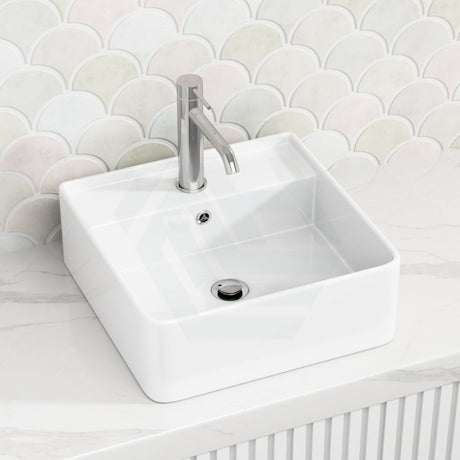
Adding an above-counter basin is one more factor to think about. A vessel-style basin sitting on top of the benchtop adds anywhere from 120 mm to 180 mm to the effective working height. If you are looking at installing a vessel-style basin, I would strongly advise that you lower the bench to between 820–840 mm in order to counter this.
If you are looking at a narrow vanity or a mini vanity for an ensuite or powder room, these follow the same height guide — compact doesn't mean lower, just narrower and shallower. Narrow vanities conform to the same standard height range as full-size units.

How to Install a Bathroom Vanity at the Correct Height
After you have established the right height and the right style of vanity, it is time to get that vanity installed correctly so the end result lines up with the height you have set.
Wall-hung vanities are your most flexible option, adjustable anywhere from 800 mm to 900 mm depending on your needs. For a wall-hung unit, measure and mark the wall at the finished floor level — not the bare subfloor. Make sure you find wall studs to fix into, or add noggins as required, because a vanity carrying a basin and benchtop items is extremely heavy. Freestanding vanities with legs will usually be fixed at 860 mm to benchtop height, as that is the standard leg height provided.
Assembling a flat-pack cabinet yourself is perfectly DIY-legal, but connecting the basin to the water supply and waste pipes must be done by a licensed plumber in every Australian state and territory. Your licensed plumber will also issue a certificate of compliance once the work is done. All plumbing products must be WaterMark certified and all sanitary drainage connections must comply with AS/NZS 3500.2. Allow two to four hours for your licensed plumber to complete the connection work.
Once the cabinet is in place and confirmed level, hand off to your licensed plumber for all plumbing connections. Provided you get all the preplanning done beforehand, the end result should be spot on.
References
National Construction Code 2022, ABCB Housing Provisions, Part 12.2 Livable Housing
State plumbing licensing legislation (VBA Victoria; Fair Trading NSW; QBCC Queensland; Building Practitioners Board WA; CBOS Tasmania; ACTPLA ACT; Building & Energy SA; ABPB NT)
WaterMark Certification Scheme, Australian Building Codes Board
AS/NZS 3500.2 Plumbing and Drainage — Sanitary Plumbing and Drainage, Standards Australia