11 November, 2026
Public Toilet Design: Commercial Fittings That Stand Up to Use
Good public toilet design relies on durable tapware, basins and layouts built for high traffic. Explore commercial fittings that stand up to daily use.

A school washroom at recess, a packed stadium concourse at half-time — spots like these grind fittings down over decades. Strip it back and public toilet design comes down to one question. Can the fittings take the punishment, clean up fast, and still hold their looks? Material choice comes first, before anything else. Stainless steel, solid brass and lead-free brass dominate commercial ranges for good reason. Run times and shut-off behaviour only get a look once the material question is settled. Take Amoza's push-button taps: push once, and the flow cuts after seven seconds. Layout and accessibility requirements come next, after fittings are locked in.
Video Credit: Young Architect
What Makes a Public Toilet Work
Good public toilet design begins well before you select your tiles or tapware: the fittings you choose need to stand up to regular usage and require little maintenance, all while remaining visually appealing over years of heavy use.
The bulk of this task is done through the choice of materials. Throughout almost every commercial range, you'll find stainless steel, solid brass, and lead-free brass options. These materials have been chosen by manufacturers because they're trusted to perform as requested. Whenever you see a listing mentioning a maximum run time or automatic shut-off after a set period, that means the fitting is designed with commercial environments and higher traffic in mind. For instance, Metlam's soap and sanitiser dispensers are listed as being fitted with a vandal-resistant lock; do ensure you check the product listing to verify capacity and how often the product should be refilled.
Refill indicators and material grade matter as well — staff should be able to spot at a glance when a dispenser needs topping up.

Layout, Access and Australian Requirements
Once you've established the right combination of features for high-usage fittings, you then need to establish how many fixtures are needed, and where. This is a layout question, and you'll get answers from the National Construction Code via your building designer and certifier on a project-by-project basis. The number of toilets and basins required in a commercial building depend on the class of the building and the estimated number of people using it, so establish this early on, before you commit to a specific layout or cabinetry supplier. Accessible facilities are also subject to additional regulations, which we cover separately below.

Hands-Free Basins
Now that you've decided how many fixtures you need, it's time to focus on the basin itself, where the obvious starting point for high-traffic public washrooms is a hands-free tap. With a hands-free basin, users don't need to touch the tap in order for the water to turn on, and the product description will list the sensor range the tap detects hands within. You'll find these sensor taps come in either hob-mounted or wall-mounted configurations, and you should look at the materials used and power source listed in the description to determine how it's powered, as some can be operated using batteries or via direct connection to a power supply. A licensed plumber connects the water, and any new power outlet or hardwiring for a mains-powered tap is licensed electrical work. Copper-alloy fittings in contact with drinking water must meet the national lead-free requirement: manufacturers may only produce Lead Free WaterMark certified products from 1 May 2026, and from 1 May 2028 only Lead Free WaterMark products may be installed in drinking-water systems; existing WaterMark-licensed stock may still be installed until then, though Victoria did not take this transition and other states or territories may also set different dates — check locally.

High-Traffic Washrooms Need the Right Tapware
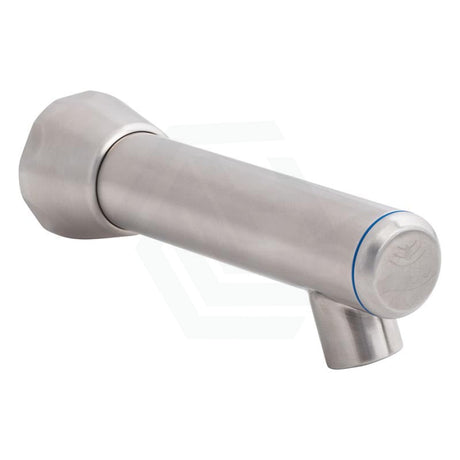
Basins don't have to run on sensors alone. Push-button timed-flow tapware is a solid fallback wherever a sensor won't fit the job. Push-button timed-flow bib and pillar taps sit in our commercial bathroom tapware range, each one cutting off automatically seven seconds after being pushed. The listings peg them for commercial, public and high-traffic washrooms. Made from lead-free brass and carrying WaterMark and WELS registration, they share shelf space with solid brass sensor mixers, stainless steel sensor bib taps, and bubblers fitted with metal mouthguards. WaterMark certification isn't box-ticking. A product type that lands on the official WaterMark Schedule of Products can't be legally installed by a licensed plumber without that certification (WaterMark Certification Scheme). WELS rating, power needs and mounting all sit on the product page — check those before ordering, then hand the connection work to a licensed plumber. Getting commercial bathroom tapware right should drive the whole job.

Public Washrooms Must Plan for Accessible Facilities
Basins and tapware aren't the whole story — the Code demands accessible facilities be planned into every public washroom too. Where accessible facilities sit within a new or upgraded public building comes down to the National Construction Code, paired with the Disability (Access to Premises – Buildings) Standards 2010; whatever fixtures end up inside, they must comply with AS 1428.1 (AS 1428.1:2021). Care and special-care suites feature in our accessible toilets range, with back-to-wall, link and connector styles on offer, alongside a wall-faced pan. Grab rails, backrest, basin and mirror are separate picks after that, chosen to match the layout. Grab rails need wall reinforcement or noggings put in by a licensed tradie — plasterboard or tiles on their own just don't hold up. That means reinforcement has to be part of the wall plan from the start, particularly once waterproofing enters the picture. Talk to your building designer and certifier before placing an order — they'll nail down which suite and edition of AS 1428.1 fits your project.
References
WaterMark Certification Scheme, Australian Building Codes Board
AS 1428.1:2021 Design for access and mobility, Part 1: General requirements for access — New building work, Standards Australia