

15 May, 2026
Bathroom Paint Ideas: Colours and Techniques for a Fresh Look
Explore bathroom paint ideas for Australian homes. Learn which paint types, finishes and colours will keep your bathroom fresh for years.

Video Credit: The Paint People
How to Pick the Right Paint Type for Your Bathroom
There's no easier or cheaper way to instantly update your bathroom than a fresh coat of paint. However, you risk the paint blistering, peeling and moulding six months after application if you use the wrong type of paint for a bathroom. All you'll be left with is wasted money and an even bigger job to clean up.
The first thing you'll need to establish is the paint type. For a bathroom in Australia, your best bet is to apply a water-based acrylic satin or semi-gloss finish. Satin sits around $30–$55 per litre at trade and retail level, offering a soft reflective quality that handles moisture well without showing every surface imperfection. Semi-gloss, typically $35–$65 per litre, is more washable and works particularly well in family bathrooms that see heavy daily use. Flat and low-sheen finishes are just not suitable for wet areas, as they absorb moisture and cannot be cleaned without marking the paint finish.
You should avoid oil-based paint in a bathroom as it takes too long to dry, contains high VOC emissions and yellows with age. Always opt for a low-VOC or zero-VOC acrylic water-based paint where possible, especially in compact spaces with limited airflow. The NCC 2022 states that windowless wet areas must have exhaust ventilation at a minimum of 25 L/s (NCC 2022, ABCB Housing Provisions, Part 10.8). Compliance matters — it is a determining factor in the longevity of the paint finish.
It's important to remember that paint does not act as a waterproofing agent. Any shower recess or areas where a wall meets a bath or shower screen must be waterproofed to meet NCC requirements. Paint is a surface finish applied on top of a compliant waterproofing layer — it cannot be used in place of one.
Once you've confirmed the right paint formulation for your bathroom, you can turn your attention to colour. It's an exciting process, albeit sometimes a daunting one, as it's a personal choice.

Bathroom Colour Schemes That Work in Any Size
Often, bathroom paint colour is decided by whatever hue or palette is trendy at the time. Before applying any colour to a bathroom, consider the light reflectance value (LRV).
When picking a colour — especially for a bathroom — LRV is one of the most useful tools you've got. The scale runs from 0 (pure black) right through to 100 (pure white). In bathrooms under 5 m², stick to colours rated at LRV 70 or above — it makes a real difference. A larger bathroom with good natural light opens the door to deeper tones — deep sage greens, dusty blues, and stone-like hues all work well within the LRV 45–65 range.
Our sunlight is stronger and warmer than what you'd find in Europe, so cool-toned colours behave quite differently here than they do in the Scandinavian interiors we tend to draw inspiration from. That cool grey looking stunning in a Stockholm apartment? Under harsh Queensland sunlight, it can come across flat and a bit drab. Before you commit, paint a swatch — at least 300 mm × 300 mm — straight onto the bathroom wall and check it at different times of day.
Across a wide range of budgets and styles, three colour scheme approaches tend to deliver reliable results in bathrooms. Varying tones of a single hue — a monochromatic scheme — brings a sense of calm and cohesion to the room. Two-tone contrast, like a deep navy lower wall paired with a crisp white ceiling, gives a space real visual weight and drama. Go with a neutral base and one accent — warm terracotta through towels and accessories, say — and you've got flexibility when your tastes shift, no full repaint needed.
Once you've settled on a colour scheme, it's worth asking whether a flat coat is enough or whether a wall technique could add interest without blowing the budget.

Bathroom Wall Ideas: Techniques Beyond a Flat Coat
A flat coat of paint is an easy and economical way to finish your bathroom walls. It is the most popular approach, but it is certainly not your only option. Here are three bathroom wall ideas worth considering.
Limewash has well and truly moved beyond European farmhouse interiors — it's become a sought-after finish in modern Australian bathrooms. The textured look comes from thinning the paint and wiping back each thin coat before the one beneath has dried. What you get is a layered effect that hides imperfections and softens the whole feel of the room. It does take practice — trial it on a test board before you touch the walls — but the results are genuinely worth it.
Bold and striking, the two-tone split runs a darker colour from floor to dado — typically 900–1,000 mm high — with a lighter colour taking over above that line. At 900 mm, that dado height lines up with most standard vanity benchtops — chosen carefully, it gives the colour split a real logic to it.
Preparation is key. If walls have been painted before, wash them thoroughly with sugar soap, lightly sand and prime prior to applying your selected coat. Silicone cannot be painted over — all silicone must be removed before painting in wet zones. New grout and silicone sealant also require curing time; allow 72 hours before painting adjacent walls. Lightly sand between coats with 220-grit sandpaper.

Bathroom Paint Colours for Small and Large Spaces
In the end, it's the size of your bathroom and the ceiling height that'll drive your colour choices. In a bathroom under 5 m², colours within the LRV 60–85 range — soft whites, pale sage, warm linen — keep things feeling open without tipping into sterile all-white territory. Match the ceiling colour to the walls — it creates the illusion of height and stops that hard horizontal line from drawing the eye to a low ceiling.
A larger bathroom over 8 m² gives you the room to take a punt on deeper, bolder colours. Charcoal, deep green, navy — dark tones like these really sing against light tiles and pale fixtures. On a display home project I worked on recently, the main bathroom — finished in a deep blue-grey at roughly LRV 22 — ended up being one of the most photographed rooms in the whole display; that depth of colour stirred an emotional response no neutral palette could've matched.

Bringing It All Together: Layout, Fixtures, and Finishing Touches
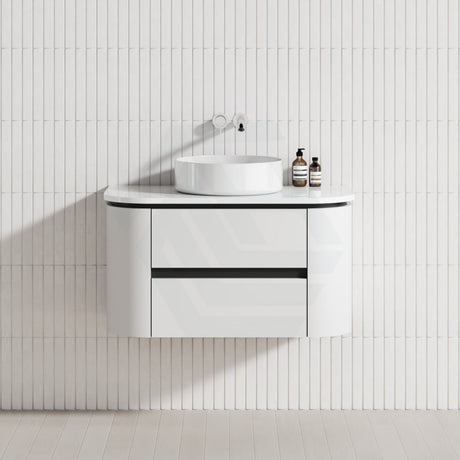
A colour is never seen in isolation — it is read in combination with the tiles, grout colour, tapware, and bathroom vanity. The vanity is always the ideal starting point. A white gloss or matt vanity leans towards cooler colour palettes. A woodgrain vanity leans towards sandy neutrals and earth tones like terracotta, all of which have featured prominently in Australian bathroom colour schemes in recent years.
If you are working with a smaller bathroom, a bathroom corner vanity could be an option. Not only does a corner vanity save valuable floor space, but because it defines one corner as a focal point, it is the perfect candidate for an accent wall or limewash finish. Browse corner vanities to find a style to suit your layout and colour palette.
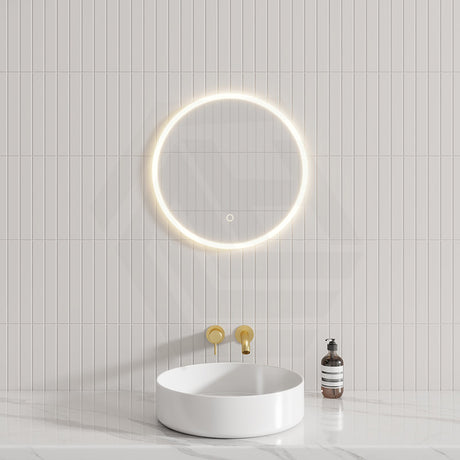
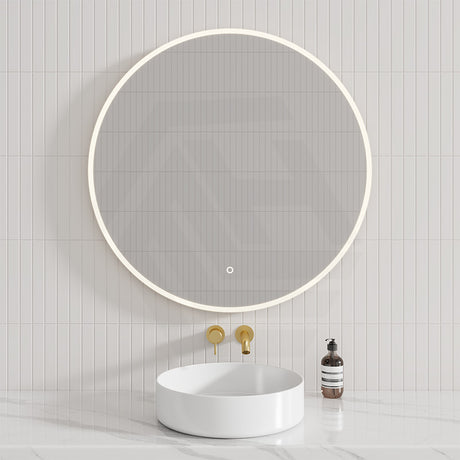
Tapware finish is another essential element that pulls together a bathroom colour scheme. A matt black finish suits darker, moodier bathroom paint ideas. Brushed gold complements earthy neutral tones, and brushed nickel complements cooler colours like greys and blues. A small detail that distinguishes a considered design from a simply painted bathroom is ensuring the towel rail, robe hooks and toilet roll holder finish matches the tapware finish.
All hardwired items such as LED mirrors and heated towel rails must be fitted by a licensed electrician. All plumbing connections and fixtures must be installed by a licensed plumber with a certificate of compliance. Painting the bathroom walls and ceiling is the only element of a bathroom renovation that is DIY-legal and, done well, can be one of the most satisfying bathroom paint ideas to execute on a modest budget.
References
National Construction Code 2022, ABCB Housing Provisions, Part 10.8 Condensation Management
National Construction Code 2022, ABCB Housing Provisions, Part 10.2 Wet Areas
AS 3740:2021 Waterproofing of Domestic Wet Areas, Standards Australia
State plumbing licensing legislation (VBA Victoria; Fair Trading NSW; QBCC Queensland; Building Practitioners Board WA; CBOS Tasmania; ACTPLA ACT; Building & Energy SA; ABPB NT)